Full-Service Aluminum Casting Solutions for Made-to-Order Industrial Pieces
Complete aluminum casting services offer businesses the capability to produce custom industrial parts customized to their specific needs. These services employ advanced methods such as sand casting, die casting, and investment casting. The resulting components are lightweight, robust, and resistant to corrosion, making them suitable for multiple industries. Understanding the benefits and applications of these casting techniques can substantially impact production efficiency and quality. What factors should one examine when selecting an aluminum casting service?
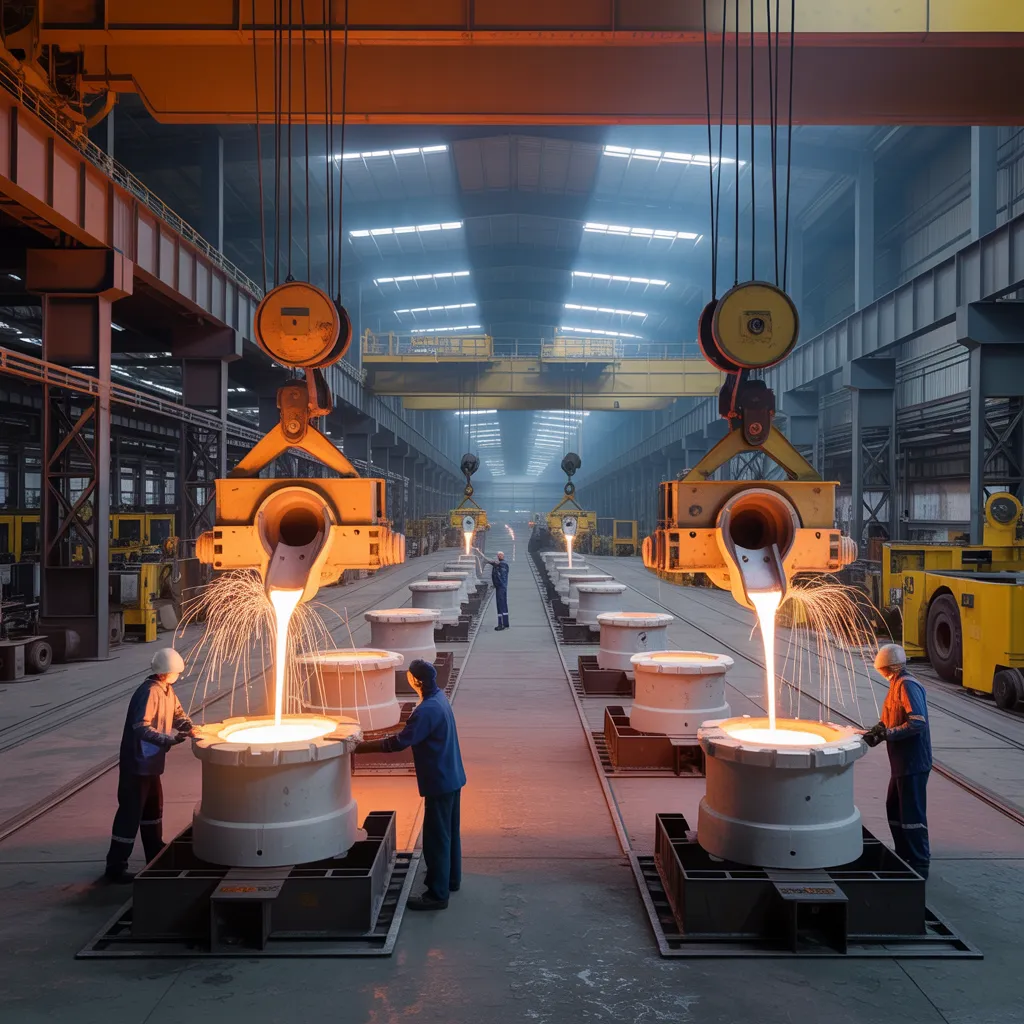
The Merits of Full-Service Aluminum Casting Solutions
Even though several manufacturing methods exist, comprehensive aluminum casting services provide a remarkable set of strengths that can greatly enhance production efficiency and product quality. This approach enables the manufacturing of intricate designs with high dimensional accuracy, reducing the need for extensive machining. The versatility of aluminum enables the creation of lightweight components without diminishing strength, making it perfect for numerous applications.
Moreover, complete aluminum casting services deliver a streamlined production process, reducing lead times and minimizing material waste. The capability to produce large volumes consistently ensures that manufacturers can meet demand without sacrificing quality. Moreover, aluminum's resistance to corrosion and exceptional thermal conductivity contribute to the longevity and performance of the final products. On the whole, these strengths make complete aluminum casting services an desirable option for industries pursuing efficiency, precision, and durability in their manufacturing processes.
Typical Applications of Aluminum Cast Parts in Industries
Aluminum casting components are extensively used across diverse industries due to their unique properties and advantages. In the automotive sector, manufacturers rely on these components for engine blocks, transmission housings, and structural frames, leveraging their lightweight nature and corrosion resistance. The aerospace industry also implements aluminum casting for parts like brackets and housings, which lead to reduced weight and improved fuel efficiency.
In the construction sector, aluminum castings are employed in window frames, door frames, and see here roofing materials, improving structural integrity and visual attractiveness. In addition, the electrical industry frequently incorporates aluminum cast parts in enclosures and heat sinks, ensuring effective heat dissipation.
The maritime industry prizes aluminum for its ability to resist saltwater corrosion, utilizing it in components such as hull structures and engine elements. On the whole, the versatility of aluminum cast parts makes them indispensable across many applications, elevating performance and longevity in diverse fields.
Vital Aluminum Casting Procedures for Custom Part Creation
Several important techniques are used in aluminum casting to produce custom parts that address specific design requirements. One frequently utilized method is sand casting, which consists of creating a mold from sand and pouring molten aluminum into it. This process is ideal for complex shapes and supports cost-effective production of small to medium-sized parts.
A further method is die casting, where molten aluminum is forced into a metal mold under high pressure. This process is perfect for high-volume production and ensures excellent dimensional accuracy and surface finish.
Lost-wax casting, or investment casting, represents another approach that facilitates detailed designs and polished finishes. This technique involves creating a wax model that is coated in a ceramic shell, which is then heated to remove the wax and harden the shell before pouring in aluminum.
These processes collectively strengthen the adaptability and performance of aluminum casting for tailored industrial uses.
Picking the Right Aluminum Casting Service?
Selecting the appropriate aluminum casting service can significantly impact the success of a project, especially after understanding the different techniques offered for custom part production. Prospective clients should evaluate several key factors when selecting a service provider. First, it is essential to consider the company's experience and expertise in specific casting methods, such as sand casting or die casting. This guarantees the service can meet the specific requirements of the project.
In addition, customers should examine the supplier's capability to handle the desired volume and complexity of parts. Technology infrastructure, such as sophisticated machinery and software for design, also play a significant role in ensuring precision and efficiency.
Another important factor is the company's reputation for customer service and responsiveness, as efficient dialogue can facilitate smoother project execution. Finally, a thorough evaluation of these factors will lead to a more successful partnership and better project outcomes.
Keeping Quality High in Aluminum Casting Processes
Maintaining high quality in aluminum casting is vital for ensuring the durability and performance of cast pieces. To achieve this, several key aspects must be evaluated throughout the casting process. First, selecting premium aluminum alloys can significantly affect the final product's strength and resistance to corrosion. Additionally, maintaining accurate temperature control during melting and pouring is crucial, as variations can result in defects such as porosity or inclusions.
Implementing rigorous quality control measures, including non-invasive testing methods and dimensional inspections, ensures that any issues are discovered early. Moreover, using modern casting techniques, such as investment casting or die casting, can boost exactness and surface finish. Lastly, continuous training for personnel involved in the casting process fosters a culture of quality awareness, promoting attention to detail. By concentrating on these aspects, manufacturers can consistently manufacture superior aluminum castings that satisfy the unique needs of their clients.
Questions & Answers
What is the Average Lead Time for Custom Aluminum Casting Orders?
The standard lead time for custom aluminum casting orders spans from four through eight weeks, influenced by factors such as sophistication, volume, and production scheduling, which can fluctuate substantially among various manufacturers and projects.
Do You Handle Small Batch Orders for Aluminum Cast Parts?
Certainly, small batch orders for aluminum cast parts can be accommodated. The company understands the diverse needs of clients and is equipped to handle varying quantities without affecting the quality or production schedule.
What Certifications Do Your Aluminum Casting Services Hold?
The aluminum casting services possess numerous industry certifications, including the ISO 9001 standard for quality management and ASTM standards for material specifications. These certifications guarantee conformity to stringent quality and safety protocols throughout the casting process.
Do You Offer Design Help for Custom Aluminum Parts?
Yes, they offer design assistance for custom aluminum pieces. Their team collaborates with clients, offering expertise in material selection, optimization techniques, and CAD modeling to verify designs match specifications and manufacturing requirements efficiently.
What Post-Casting Services Can Be Applied to Aluminum Parts?
Services after casting for aluminum parts typically consist of machining, surface finishing, heat treatment, inspection, and assembly. These supplementary processes enhance the final product's accuracy, durability, and overall quality, ensuring it meets particular industry standards and customer requirements.