Exploring the Role of Metal Foundries in Industrial Production
Metal foundries play a vital role in the domain of industrial manufacturing. They transform raw materials into essential parts that support diverse industries, from aerospace to automotive. Sophisticated casting processes facilitate the production of long-lasting components that considerably boost performance and safety. However, as they adopt emerging technologies and confront sustainability challenges, the future of these foundries is under scrutiny. What lies ahead for this critical industry is worthy of consideration.
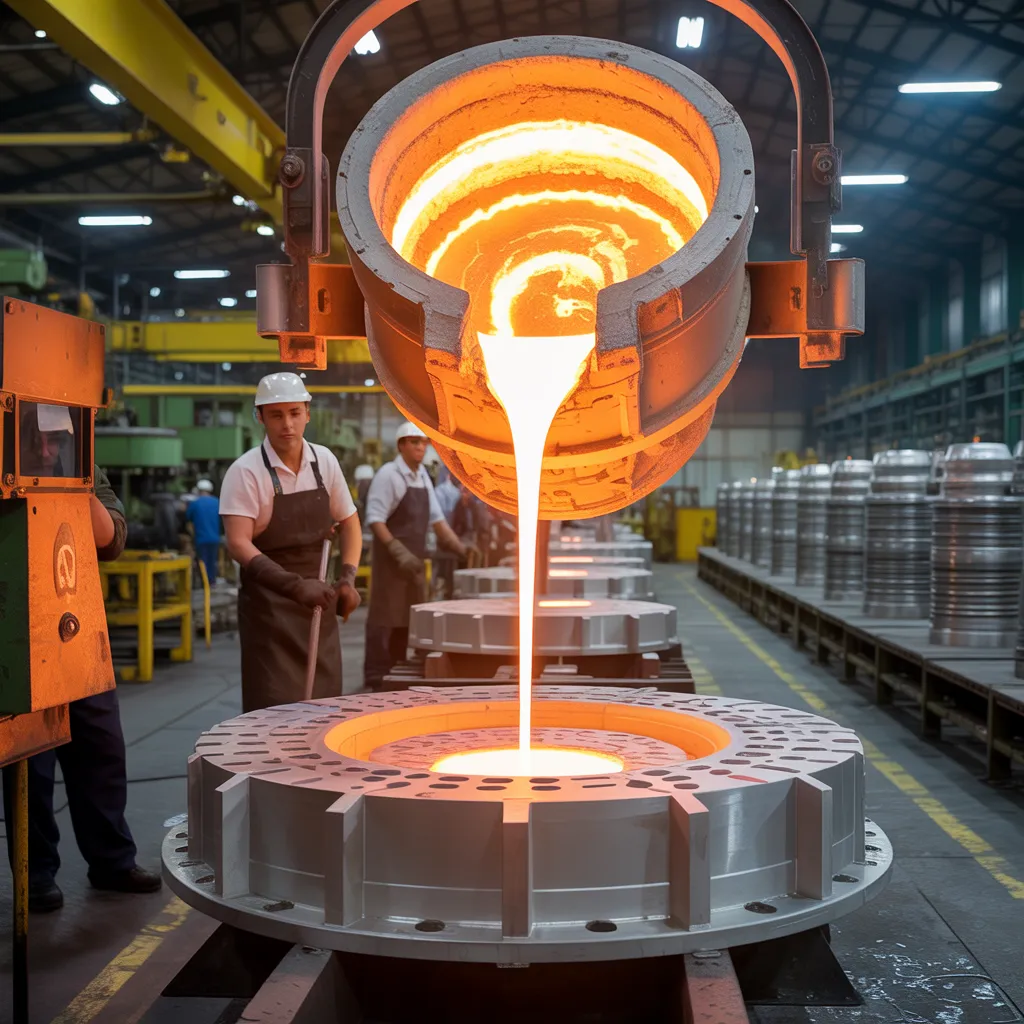
Understanding the Metal Casting Process
The metal casting procedure converts molten metal into solid forms using a variety of methods. This technique commences with metal being melted, usually within a furnace, where it reaches a temperature suitable for casting. When fully molten, the metal gets poured into a prepared mold, which determines the form of the finished component. Numerous techniques including sand casting, investment casting, and die casting are employed, with each providing distinct benefits in terms of precision and complexity.
Heat dissipation takes place as the liquid metal hardens within the mold, enabling it to assume the required configuration. Following the solidification process, the mold is removed, and the casting is commonly put through completion procedures like mechanical processing or surface finishing to enhance its properties. Understanding these fundamental steps is vital for optimizing production efficiency and guaranteeing the standard of the final components, establishing the metal casting method a fundamental element of modern industrial manufacturing.
The Historical Evolution of Metalworking Foundries
As civilizations evolved, the evolution of metal foundries became pivotal to industrial progress. At first, ancient cultures used rudimentary smelting processes to obtain metals from natural ores, with proof of copper and bronze casting dating back to 4000 BCE. The introduction of iron casting around 1200 BCE represented a major turning point, enabling the creation of stronger tools and weapons.
Throughout the Medieval period foundries advanced significantly with the emergence of advanced furnaces and molds, allowing for greater manufacturing efficiency. The Renaissance period saw the incorporation of systematic scientific methods into metalworking, elevating both the quality and precision of the work.
The Industrial Revolution catalyzed the widespread growth of metal foundries, as steam power and mechanization revolutionized manufacturing capabilities. During the late 1800s, foundries proved critical to a wide range of industries, supplying essential parts for machinery, transportation, and infrastructure. This historical development emphasizes the pivotal contribution of metal foundries in shaping modern industrial landscapes.
Uses of Metal Casting Across Industries
Metal casting plays an essential role in a wide range of industries, significantly influencing production processes. In the automotive industry, it is critical for producing elements that boost automotive performance and safety. Similarly, its applications in aerospace and construction equipment manufacturing underscore the adaptability and significance of metal casting in modern production.
Automotive Parts Fabrication
Within the automotive parts industry, metal casting serves a vital function in creating essential parts that demand durability and accuracy. This method facilitates the production of elaborate designs, which are indispensable in components like engine blocks, transmission housings, and suspension parts. By utilizing materials like aluminum and iron, producers can create components that are both light and resilient that boost overall vehicle performance and fuel efficiency. Sophisticated casting processes, including die casting and sand casting, enable high-volume production while maintaining tight tolerances. Additionally, the capacity to reuse metal scrap in foundries supports sustainability efforts in the automotive industry. As vehicles evolve with new technologies, the need for advanced casting methods keeps expanding, underlining the significance of metal foundries in vehicle production.
Aerospace Industry Applications
The aerospace industry depends significantly on metal casting to manufacture essential parts that necessitate superior strength combined with minimal weight. Elements like turbine blades, structural frames, and engine parts are frequently manufactured through innovative casting processes. Such methods enable intricate designs that enhance aerodynamics and performance while decreasing component weight. Metals like aluminum, titanium, and superalloys are commonly used due to their superior structural properties and high-temperature tolerance. Furthermore, exact casting procedures provide tight tolerances, which play a vital role in safety and efficiency in aerospace applications. As the sector evolves, developments in casting processes steadily elevate component performance, leading to superior fuel economy and aircraft reliability. This emphasizes the essential function of metal foundries in supporting aerospace advancements.
Heavy Equipment Parts
A wide variety of elements in construction equipment are made through metal foundry processes, highlighting its fundamental role in the manufacturing landscape. Essential components such as motor blocks, transmission casings, and body framework elements take advantage of the reliability and robustness that the casting process provides. The process allows for detailed configurations, which are critical for the optimal performance of construction equipment. Moreover, cast metal materials such as ductile iron and steel supply the needed toughness to withstand harsh working conditions. The capability to create significant numbers of pieces with uniform standards also strengthens the trustworthiness of building machinery. As the market demand for durable and effective machines increases, the metal foundry sector stays vital to developing construction industry advancements, confirming that equipment fulfills industry standards and operational requirements.
Advanced Technologies Reshaping Foundry Production
With the growing need for efficiency and precision in manufacturing, cutting-edge technologies are revolutionizing foundry production. Modern automation solutions, most notably robotics, are elevating the speed and accuracy of metal casting procedures. These robotic systems can perform repetitive tasks with minimal error, reducing labor costs and improving output consistency.
Moreover, the integration of 3D printing is transforming mold fabrication, facilitating rapid prototyping and sophisticated geometries that conventional techniques are unable to produce. This innovation not only reduces lead times but also limits material wastage.
Data analytics and the Internet of Things (IoT) are increasingly enhancing operational efficiency by facilitating real-time oversight of equipment and workflows. These innovations support predictive maintenance, minimizing downtime and boosting overall productivity.
As a whole, these innovations are revolutionizing the foundry production landscape, guiding manufacturers toward more effective and exact operations across a demanding industrial sector.
Why Sustainability Matters in Metal Foundries
Although metal foundries have historically prioritized production efficiency and cost-effectiveness, the rising importance of sustainability is redefining industry priorities. As global awareness of environmental issues rises, foundries are recognizing the need to minimize their ecological footprint. This transformation is fueled by regulatory requirements, consumer expectations for eco-friendly products, and the lasting economic advantages of sustainable operations.
Integrating eco-friendly technologies and material reuse conserves resources while simultaneously reducing operational costs. Additionally, integrating sustainable practices improves the credibility of metal foundries, appealing to collaborators and customers who emphasize environmental stewardship.
Environmental responsibility in metal foundries also drives innovation; companies are exploring alternative materials and methods that lessen environmental impact. At its core, integrating sustainability is becoming vital for foundries to maintain competitiveness in a market that increasingly emphasizes environmental stewardship alongside established performance metrics.
What Obstacles Are Metal Foundries Encountering Today?
Metal foundries are actively facing several significant challenges that impact their operations. Increasing energy expenses and a persistent shortage of skilled labor create complications in production workflows, while stringent environmental regulations impose additional compliance burdens. Resolving these concerns is vital to sustaining the industry's growth and competitive advantage.
Rising Energy Costs
Rising energy costs pose a significant challenge for metal foundries, influencing their production efficiency and financial viability. As energy costs continue to shift, foundries encounter higher costs tied to melting, casting, and finishing operations. These increasing costs may contribute to reduced profit margins, compelling some foundries to reassess their pricing models or operational methods. Furthermore, the need for energy-intensive equipment and technology further exacerbates the financial strain. Foundries may find it necessary to pursue energy-efficient technologies to offset these expenditures; yet such investments demand considerable upfront capital. Furthermore, the competitive environment grows more demanding as foundries strive to preserve their market standing while navigating these financial challenges. As a result, controlling energy expenditures continues to be a vital concern for the long-term viability of metal foundries.
Lack of Skilled Workers
As the need for sophisticated metal components rises, foundries are grappling with a significant skilled labor shortage that jeopardizes their operational efficiency. Numerous veteran employees are reaching retirement age, and an inadequate number of new professionals are entering the field. This deficit leads to higher labor expenses and production timeline associated article disruptions. Foundries commonly face difficulties in recruiting younger workers, as the sector is viewed as less attractive than technology-driven industries. Additionally, the specialized skills required for metal casting and machining take time to develop, exacerbating the issue. As a result, foundries may find it difficult to satisfy market requirements, diminishing their market position and overall profitability. Resolving this deficit is critical for maintaining expansion within the metal foundry sector.
Compliance with Environmental Regulations
Compliance with environmental regulations poses significant challenges for foundries in today's industrial landscape. These facilities are increasingly pressured to minimize emissions and waste while adopting cleaner technologies. The intricate nature of regulations, which differ by region and frequently evolve, generates uncertainty and demands ongoing adaptation. Financial constraints further complicate compliance efforts, as investments in new equipment or processes can be substantial. Furthermore, foundries must address the challenge of guaranteeing that their employees are sufficiently trained in environmental requirements. Failure to comply can result in substantial fines and reputational harm, underscoring the importance of continuous monitoring and management systems. Striking a balance between operational efficiency and regulatory adherence remains a critical issue for the sustainability of metal foundries.
Future Innovations in Metal Foundry Technologies
The evolution of metal foundry technologies holds extraordinary potential that could transform industrial manufacturing. Innovations such as additive manufacturing are gaining traction, allowing for the creation of complex geometries and reducing material waste. Additionally, the integration of artificial intelligence and machine learning enhances process optimization, enabling real-time monitoring and predictive maintenance.
Sustainability remains a key priority; innovative recycling processes and environmentally conscious materials are being engineered to lessen ecological impact. The adoption of 3D printing within foundries may optimize the prototyping process and cut down lead times, resulting in more adaptable manufacturing.
Moreover, advancements in automation and robotics aim to advance safety and overall efficiency within foundry operations. Such technologies not only aim to boost productivity but also to establish safer work environments. As these technologies evolve, they will likely lead to a more sustainable, efficient, and responsive metal foundry sector, effectively reshaping global industrial production.
Frequently Asked Questions
What Types of Metals Are Commonly Used in Foundries?
Commonly used metals in foundries include iron, aluminum, copper, and brass. Each of these metals is suited to distinct applications, with iron being preferred for structural strength, aluminum for light-duty construction, and copper for superior electrical conductivity and long-term corrosion resistance.
What Methods Do Foundries Use to Ensure Quality Control in Production?
Foundries ensure production quality control through thorough examination of raw materials, continuous monitoring during the melting and casting processes, and enforcing rigorous compliance with industry standards, yielding premium metal products that fulfill specifications.
What Safety Measures Are Implemented in Metal Foundries?
Metal foundries implement various safety measures, including personal protective equipment for employees, air filtration systems to reduce exposure to harmful fumes, scheduled equipment inspections, workplace safety training initiatives, and emergency management protocols to reduce hazards related to molten metal operations.
How Do Foundries Handle Waste and Byproducts?
Foundries handle waste and secondary materials via recycling, responsible disposal, and treatment processes. They implement approaches to reduce the impact on the environment, maintaining regulatory compliance while promoting sustainability throughout their facilities and neighboring communities.
What Job Opportunities Can Be Found in the Metal Foundry Industry?
Job prospects in the foundry metal industry include roles such as engineers, metalworkers, foundry managers, and quality control inspectors. Furthermore, positions in maintenance, environmental management, and research and development are available as well, guaranteeing a wide range of career options.